
The defense industry is undergoing an unprecedented development cycle – at warp speed. Augmented Reality (AR) is emerging as one of the key technologies in the area that is called the Future Soldier. AR offers significant potential across various areas including;
- Tactical operations
- Command and control systems
- Training & simulation
- Field maintenance
In this article, we will explore the key application areas of AR in defense and which benefits it can bring about to improve operational effectiveness.
1. Current State of Defense
Modern defense is undergoing a rapid and major transformation, driven by changes in geopolitical environment and catalysed by rapid advances in digital technology. From battlefield intelligence to logistics and command and control (C2) systems, military operations are becoming increasingly connected, data-driven, and adaptive.
This shift is reshaping how defense organizations operate. Traditional defense contractors are now collaborating with tech innovators to develop smarter systems that can respond to complex, fast-changing scenarios with greater speed and precision.
Among the emerging technologies, AR is gaining traction for its ability to merge digital intelligence with physical environments. Unlike conventional interfaces, AR delivers real-time, context-aware information directly into the user’s field of view, enhancing situational awareness, coordination, and decision-making in mission-critical situations.
2. Augmented Reality Technology
Augmented Reality refers to the overlay of digital information, such as graphics, data, or instructions onto the physical world in real-time. Unlike Virtual Reality (VR), which immerses users in a fully digital environment, AR enhances the user’s perception of their actual surroundings by adding contextually relevant digital layers.
While AR is widely known in consumer sectors like gaming and entertainment, its adoption in professional and industrial domains is accelerating. In defense, AR is being recognized as a strategic enabler that can improve operational effectiveness, situational awareness, and decision-making under pressure. Whether used for training, maintenance, tactical operations, or command and control, AR allows personnel to access vital information without breaking focus or losing situational awareness.
3. AR Applications for Defense
AR has long played a role in defense, particularly in aviation. Fighter jets have used Heads-Up Displays (HUDs) for decades to project critical flight and targeting information directly into the pilot’s line of sight. The HUD technology which allowed pilot to access information hands-free while maintaining their head positioned Up and forward, can be seen as a precursor for the AR systems used today.

Image source: LiteHUD Heads–Up display for fighter jets by BAE systems
What has changed in recent years is the scope and sophistication of AR technology. Advances in hardware and software have expanded AR’s potential far beyond the cockpit. Today, AR is being integrated into a wide range of defense applications, from immersive training simulations and real-time maintenance support to enhanced situational awareness in field operations. AR offers several strategic benefits, including:
- Improved situational awareness
- Increased operational efficiency
- Faster and smarter decision-making
- Enhanced responsiveness in dynamic environments
A notable example is the U.S. Army’s Integrated Visual Augmentation System (IVAS) program. In collaboration with industry partners, the U.S. Army is developing AR goggles that provide soldiers with beyond-line-of-sight perception. This technology boosts efficiency and accelerates mission command, particularly in operations involving unmanned systems.
Another example comes from the British Army, which has explored AR to enhance command and control during training exercises. Headquarters teams were geographically dispersed but remained connected through AR interfaces, enabling seamless collaboration and real-time coordination.
To better understand AR’s impact on modern defense, the following sections explore its use across four critical domains: field operations, training and simulation, maintenance, and the hardware platforms that make it all possible.
3.1 Tactical Operations
In dynamic and high-pressure environments, AR enhances operational effectiveness by delivering real-time information directly into the soldier’s view. Whether it’s navigation, target identification, or mission coordination, AR supports faster, more informed decision-making on the move.

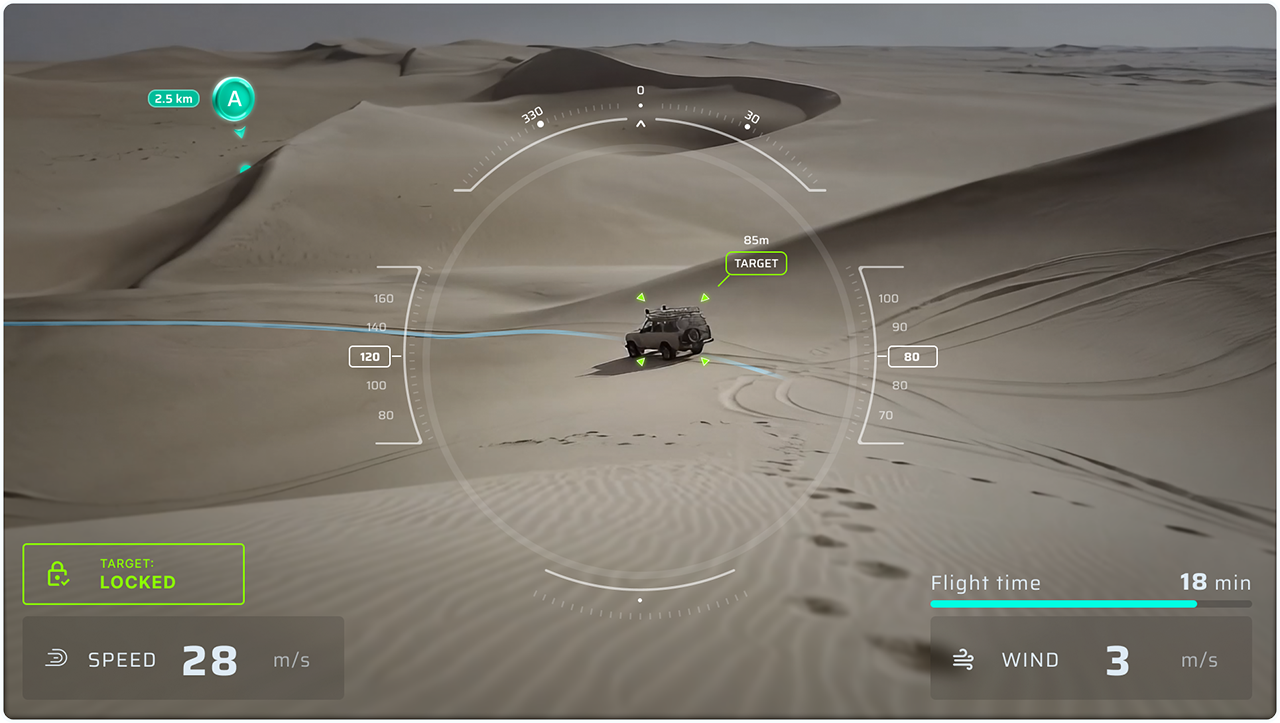
Image source: AR-enhanced vehicle tracking concept by Basemark
Through head-mounted displays or handheld devices, personnel can access live maps, C2 and sensor data, and mission-critical updates without taking their eyes off the environment. This seamless integration of digital and physical information improves:
- Situational awareness in complex terrains
- Coordination between dispersed units
- Speed and accuracy of tactical decisions
- Safety through minimized cognitive load
For example, AR can highlight safe routes, mark enemy positions, or display drone feeds in real time, enabling teams to act with precision and confidence, even in unfamiliar or rapidly changing conditions.
3.2 Training & Simulation
Training and simulation are one of the most established areas where AR is being applied in defense. AR enables realistic, immersive combat simulations that replicate battlefield conditions without the risks or costs of live exercises. By integrating digital elements with the physical world, soldiers can train in complex scenarios, such as urban combat, equipment handling, or tactical coordination, while remaining in a controlled environment.
This approach enhances learning outcomes by allowing repeated exposure to high-pressure situations, helping personnel to improve decision-making. AR also supports remote training, enabling teams in different locations to interact and collaborate in shared virtual environments. These capabilities make AR a powerful tool for preparing personnel for real-world missions with greater flexibility, safety, and cost-efficiency.
3.3 Field Maintenance
Keeping military equipment operational is mission-critical, even minor technical issues can compromise safety, delay missions, or reduce combat effectiveness. Maintenance work and reparations are therefore a constant and high-stakes priority across all branches of defense. AR is proving highly valuable in streamlining maintenance and repair workflows. By projecting interactive schematics, diagnostics, and step-by-step guidance directly onto equipment, AR helps personnel carry out complex tasks with greater speed and accuracy.
Instead of relying on printed manuals or remote instructions, teams can access real-time visual overlays that identify faulty components, suggest corrective actions, and even simulate repair procedures before execution. This leads to:
- Faster troubleshooting and repairs
- Reduced downtime for mission-critical systems
- Lower risk of human error
- Efficient knowledge transfer across units
For instance, AR glasses can guide crews through engine diagnostics or electronic system repairs, even in remote or high-pressure environments. This ensures consistency and precision, regardless of experience level or location.
These diverse applications are made possible by the evolution of AR hardware. The effectiveness of AR in defense doesn’t rely solely on software innovation; it also depends on the devices that deliver these experiences in real time, under demanding conditions. The next section explores the key hardware platforms that enable AR capabilities across defense scenarios.
3.4 Hardware Powering AR Capabilities
AR content is supported across a wide range of devices, each suited to specific operational contexts. These devices enable seamless integration of digital overlays into physical environment, allowing personnel to access mission-critical information instantly, improving coordination, safety, and decision-making across various scenarios.
Common AR-enabled devices include:
- Smart Goggles and Helmets
Allows hands-free access to e.g. tactical data, navigation cues, and environmental overlays directly in the soldier’s line of sight.
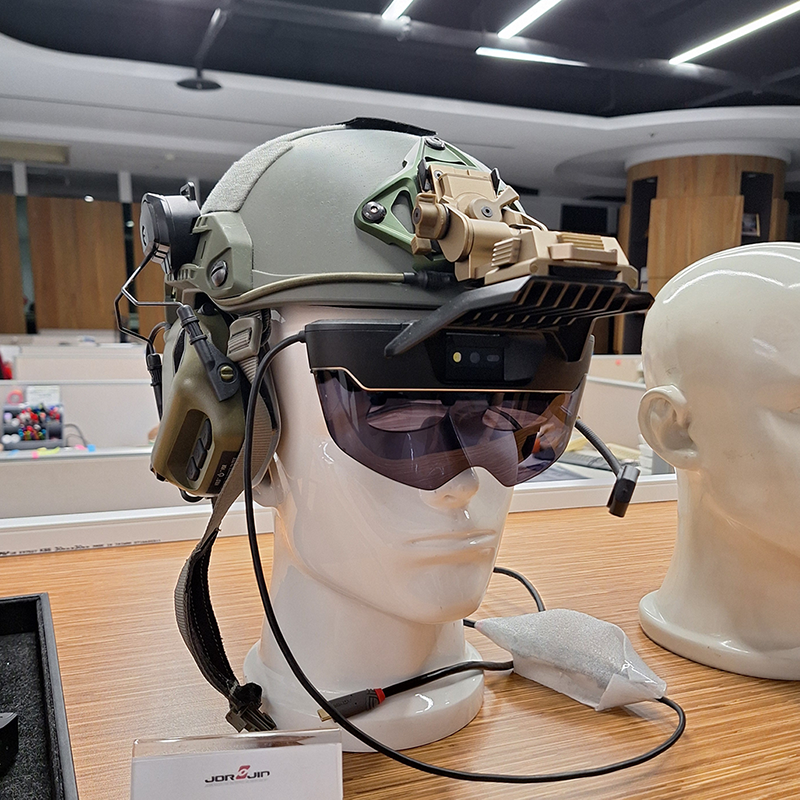
Image source: AR goggles integrated into a tactical helmet setup by Basemark’s partner company Jorjin.
- Head-Up Displays (HUDs)
Used in vehicles and aircrafts to project essential information, such as speed, targeting, and navigation.
- Drones
Enhance real-time drone video streams with augmented reality overlays to support advanced surveillance, situational awareness, and precise target tracking.
- Tablets and Handheld Devices
Offer flexible, portable AR interfaces for field personnel, supporting diagnostics, coordination, and real-time updates in diverse environments.
As AR continues to evolve, so too will the hardware that supports it. Future innovations may include lighter, more power-efficient wearables, integrated edge computing, and enhanced connectivity, further expanding the role of AR in defense operations.
4. Rocksolid AR: Military-Grade AR
Rocksolid AR is Basemark’s software solution for delivering high-performance augmented reality to the defense sector. Designed to meet the extreme demands of military operations, Rocksolid AR combines our deep expertise in computer vision with a proven track record in automotive-grade software.

Image source: Military AR HUD Concept by Basemark
Our AR technology is already in series production across millions of civilian passenger vehicles, demonstrating its reliability, scalability, and robustness in real-world conditions. This foundation allows us to offer defense organizations a turnkey AR solution that is both battle-ready and future-proof. Whether it’s AR-enhanced navigation, tactical assistance, or remote teleoperations, Rocksolid AR is engineered to perform in the most challenging environments.
This capability is further reinforced by our participation in the eALLIANCE ecosystem, a defense technology initiative led by Patria. As part of this collaboration, Basemark contributes its AR expertise to joint development efforts focused on remote-controlled vehicles.
Our work in these programs gives us a clear view of the challenges the sector is addressing. Military publications, such as the Army University Press, have highlighted the technical issues facing AR adoption in defense. Based on our experience in automotive AR, we recognize that many of these challenges are shared across both domains, such as:
- Low-latency performance
- Real-time 3D rendering
- Precise positioning and tracking
- Visual stability under motion and vibration
These are proven challenges we have already solved through practical implementation in the automotive sector. Our proprietary AR computer vision algorithms are designed to overcome these limitations, enabling seamless integration of digital overlays into fast-moving, high-stakes scenarios.
Rocksolid AR brings together a set of capabilities that make it exceptionally suited for defense applications:
- Mission-critical reliability proven in automotive production
- Advanced computer vision tailored for military-grade AR
- Scalable architecture for rapid deployment across platforms
- Cross-domain expertise bridging automotive and defense innovation
With Rocksolid AR, defense organizations gain a trusted platform that enhances situational awareness, accelerates decision-making, and improves operational efficiency, without compromising on safety or performance.

